
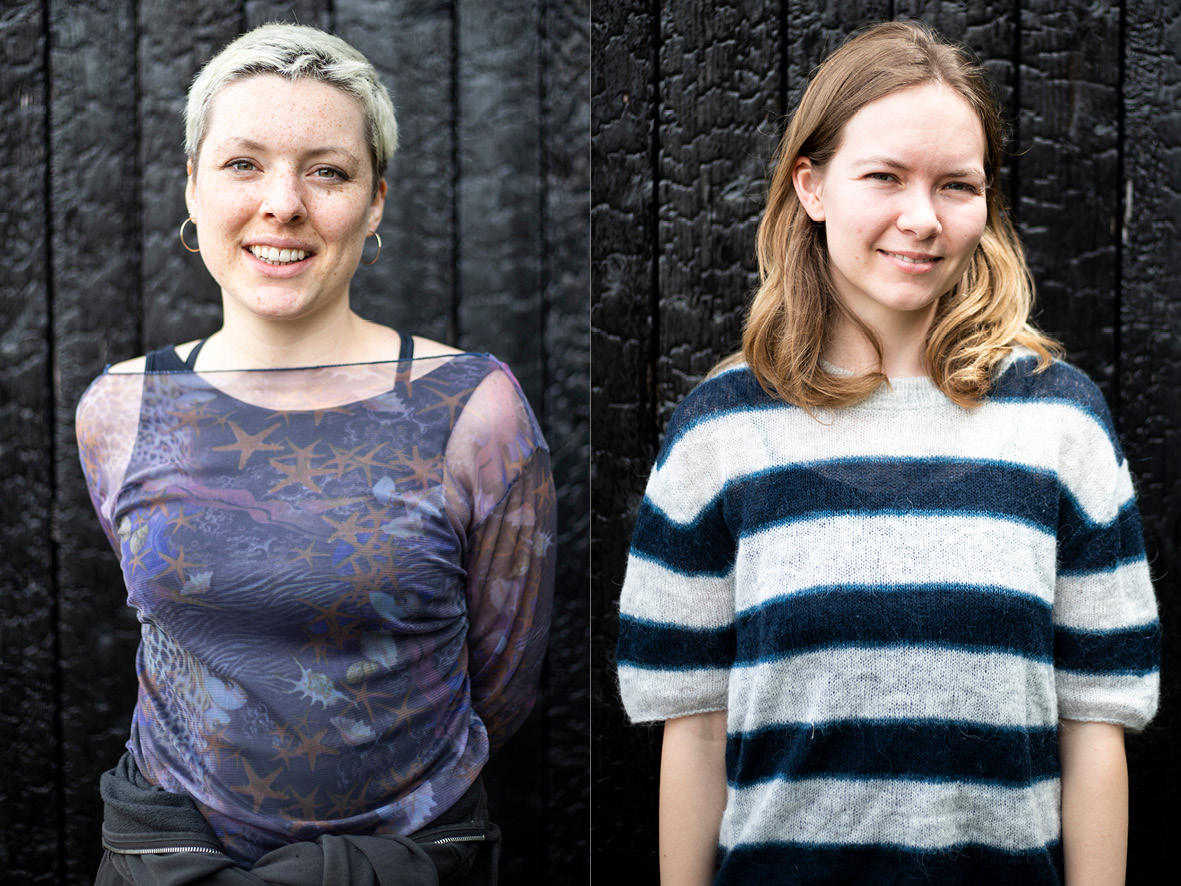
FLOW – Billy & Mirte
A Movement can be a collective, organized effort by individuals or groups who share common values, beliefs, or objectives to bring about social, political, or cultural change. This can sometimes be expressed by a public demonstration or gathering. Often these individuals or groups come together because they were moved emotionally and want to express these emotions, voice their grievances, and advocate for specific causes or social change. They can take various forms, including marches, rallies, sit-ins, pickets, or strikes. Protests serve as a means for people to exercise their right to freedom of expression and to collectively demand transformations. A movement strives for progress in some particular direction, and can evolve over time, gaining momentum and attracting support from diverse individuals and organizations. Even though the power of the crowd is that it behaves as a collective, the impact of each individual and the interaction between individuals is important (For example, there already were a lot of problems about race in America, and many people were ready to fight for their rights and social justice. However, a trigger was needed that brought people together to protest. Because people are influenced and match their behaviour to other people; I will stand up if I know you will stand up too.). In that sense, these crowds of people are systems that share characteristics with fluids. Both flow in response to external forces and are defined as a collective manifestation of the complex (internal) behaviour of individual elements. There are many different flows of people that can be observed. For example the Pride parade or a march for climate, but also migration, soldier parades, panicking fleeing crowds, dancing at festival, or walking routes such as Camino de Santiago and the Dodentocht.
Can we characterize these flows of people in a way we would measure and characterize flows of fluid?
From the external motion and behaviour of the crowd, can we deduce the impact and social-emotional energy that it carries?
And when presented with the information of the collective flow they are part of, can it influence people to think about their individual impact and drive them to move (differently)? The project consists of two parts. One part shows the visitor examples of flows of people over the world that we in some way tried to characterise. The other part analyses the visitors themselves as a flow and subsequently provides them with their fluid information.
Part 1
Different types of movements (marches, strikes, hikes, parades, …) will have different flow characteristics because the internal motivation to move is also different for each cause. We make a video compilation of as many diverse movements like these on which we simultaneously display the flow characteristics we have ascribed to them. Some parameters are actually measured from the footage: density, flowrate, energy ( , for which we will estimate ? = 3 a value for T based on the 2 ??? velocity of individuals, as is done for particles ), other parameters we will make up the values ourselves but are still based on internal purpose of the movement. For example we will use surface tension as a measure of literal tension of a crowd: For a climate march this will be low while for a BLM protest this will be high.
Thermal conductivity is a measure of how people are influenced by each other/ how contagious a crowd is, rather than being mostly influenced by external forces: Pride parade or dancing has high thermal conductivity, while a military parade or a religious hiking route has low thermal conductivity. Other parameters might include heat capacity, laminar/ turbulence, compressibility, viscosity, refractive index, flow direction, … The video is projected onto a wall and the interpretation/ meaning of these parameters is up to the visitor to decide. We still have many other smaller ideas that symbolise the analogy of a crowd/movement and fluid dynamics. Perhaps some of these ideas can still be present in the room, such that the visitors will create an interesting flow pattern throughout the room while passing by these objects/texts. Or maybe these can be the projects from the other participants and their interpretation on Movement. Main question: What can movement of people do / accomplish? What can movement of fluid do / accomplish? -> how much litre human do you need to move something? (MAYBE) The examples of crowd flows can be juxtaposition with examples of the power of fluid flows such as ebb and flow of tides, the origins of rivers and oceans (, tsunami), as well as the fearsome effects of water in erosion, floods, rain and storms. Or how fluids can be mixed, change properties, are laminar or turbulent. (I’m not yet sure about this part, because I really want to represent the people as a fluid and not as water. Fluid is more broader and general and can have very diverse properties. Water has already been done many times before) Note by Part 2: We really like part 2, but think it will be too difficult to make it happen within the time frame and resources we have. We'd love to find a way to simplify the idea, but since we're not there yet, we may have to let it go. Unless you can steer us towards a viable visualization....
Part 2
From part 1, there will be little facts or artifacts about flows/movement present on the walls or floor, or other objects. Whatever catches the visitors attention, will determine the route they take and therefore ‘change’ the flow. However, other people might copy them to see what can be read, or on the contrary go to some other place where it is less crowded. Without consciously knowing it, they are exactly behaving as a fluid by reacting to micro cues and the environment. When entering the visitor can choose whether they want to participate in the flow. If they do so, their movement will be monitored throughout their visit. This can be considered as an act of engagement; they are willing to be visible and represent the flow of the crowd. However, even if the visitor chooses not to engage they will still inevitably influence the overall flow. “participating” might encompass carrying a Bluetooth tag of some sort such that it is possible for us to visualize the flow patterns of people and determine flow rate, density, temperature/energy, turbulence, etc. (An alternative might be pressing a button, scanning a QR code, recording of the room, …).
A screen will show a visualisation of the flow of the visitor crowd and will regularly be updated, therefore enabling the visitors to see their own impact on the flow. It will also show some of the parameters that are used in the video of part 1 but additionally will display words that are descriptive of a crowd of people rather than a fluid. Examples might be: Exciting, Positive, Spirited, Lively, Passionate, Animated, Stimulating, Powerful, Dynamic, Determined, Engaged, Calming, Boisterous, Synchronised, Peaceful, Harmonious, Caring, Compassionate, Supportive, Welcoming, Accepting, Encouraging, Sympathetic, Inclusive, Provocative, Rebellious, Disruptive, Revolutionary, Demanding, Confrontational, Militant, Daring, Radical, Combative, Controversial, Stagnant, Conservative, Chaotic, .. Ideally we can write a program code that matches certain values of parameters to certain words to be displayed. For example: when the crowd is not very spread out over the room (high density), and moving slowly collectively (low flow rate), and moving slow individually ( low energy), the words ‘ Harmonious’, ‘Inclusive’ , ‘Synchronised’, or ‘Compassionate’ might be displayed. While low density/ high flow rate/ high energy , give the words ‘Stimulating’, ‘Chaotic’, ‘Rebellious’, ‘Exciting’, or ‘Provocative’. As a result the visitor is confronted with their own movement both as a collective entity as their individual impact. You can not escape being part of movement, so how do you choose to move (differently)?
Video examples
Battle of Flowers parade San Antonio